Fire safetyFire safety

Norgips fire protection partitions will protect your home

A sense of security is everyone's most basic need.

We want to feel confident and comfortable especially where we spend the most time - at home and in the workplace.

Fire resistance

Every element of a building must meet certain requirements in order to properly protect the occupants in the event of a fire.

The criteria being examined in detail are:

  • R - fire resistance 
  • E - fire tightness 
  • I - fire insulation

The longer a building envelope retains its load-bearing, separating and insulating function from high temperatures, the greater its fire resistance. In practice, this means a slower spread of fire. Fire resistance classes usually combine the criteria E and I, or R, E and I, e.g. EI 15, EI 60, REI 180, where the number indicates the time measured in minutes.

It is worth bearing in mind that a partition with a higher fire resistance rating will both provide better sound attenuation and be more resistant to damage.

The precise classification makes the selection of suitable solutions simple. The documentation for each type of element includes details of the materials used.

Wide range of fire protection partitions

Fire resistance is a category that relates to the building envelope, not to individual plasterboards.

In order to achieve the appropriate fire resistance class of a given partition, it must be made of the elements described in the documentation for the type of partition in question. The individual components of a given type of partition have been tested in the laboratory as a complete solution. The fire resistance class will only be obtained when the partition in question is constructed from the exact components that make up the system. Any deviation from this rule would result in such a partition not meeting the requirements of the specified fire resistance class.

Ready-made solutions

There are five classes of fire resistance for a building, which are defined in the technical conditions to be met by buildings and their location. Each is marked with a letter from 'A' to 'E' - in order from highest to lowest.

Fire safety requirements depend on the height, size, location, technical conditions and function of the building.

The fire barrier systems offered by Norgips are suited to all types of construction and offer the best guarantee of reliable fire protection. They protect the structural elements of buildings against the effects of fire and act as independent fire barriers in EI, REI, R and RE classes.

Fire resistance

Fire resistance class

Building fire resistance class

Classifications for fire resistance (fire classifications)

All glossary terms

Fire resistance

Fire resistance is an ability of a partition / building element to meet applicable requirements in conditions simulating a fire situation. During a fire, the most vital element is the possibility of evacuation so the measure of fire resistance is the time from the beginning of the (expressed in minutes), during which the following criteria are still met:

  • R - fire load capacity, i.e. a condition in which a described element endures the fire load. The loss of fire load capacity results from a mechanical damage, loss of stability or exceeding of limit values for deformation or displacement. Drywall systems are described by the R parameter only if they constitute fire separation elements.
  • R - fire tightness, i.e. a condition in which a described element provides a separation. Fire tightness is degraded when flames, cracks or gaps of width exceeding the limit values appear on non-hearted surfaces, which are permeated by gases or flames or when an element is detached from a structure.
  • I - fire rating, i.e. a condition in which an element fulfils an insulating function in order to protect against high temperatures. A fire rating is degraded when excessive temperature appears on the external side of a tested element.

Fire resistance class

A fire resistance class describes fire resistance required for a given partition / building element.

Fire resistance classes usually combine the ordinary criterion E and I, or R, E and I, e.g. EI 15, EI 30, EI 45, EI 60, EI 90, REI 120, REI 180.

See the “Fire resistance“ definition for a more precise explanation of the E, I and R criteria.

Building fire resistance class

Five fire resistance classes are established for the building, denoted by letters in order from highest to lowest 'A', 'B', 'C', 'D', 'E'.

Elements of a building included in a given fire resistance class must meet the conditions defined in the Ordinance of the Minister of Infrastructure of 12 April 2002 on the technical conditions to be met buildings and their locations.

Classifications for fire resistance (fire classifications)

These are documents issued on the basis of tests by authorised research units which define the fire resistance classes(e.g. EI 30, EI 60) for tested building elements, e.g. as regards drywall lining systems - partition walls, curtain walls, suspended ceilings, attic linings and dry screeds. Fire classifications also contain detailed descriptions of solutions, information on materials used, drawings, solution details, joint details, etc.

All glossary terms
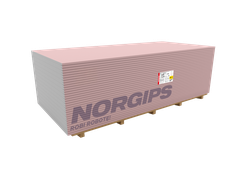
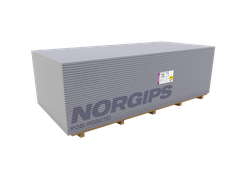
NORGIPS S GKF 12.5 mm type DF
Fire-resistant plasterboard
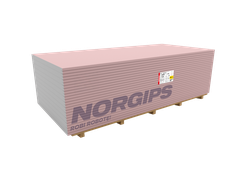
NORGIPS S GKF 15 mm type DF
Fire-resistant plasterboard
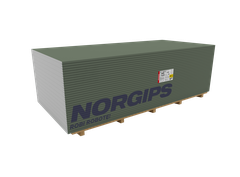
NORGIPS S GKFI 12.5 mm Type DFH2
Fire-resistant plasterboard, impregnated
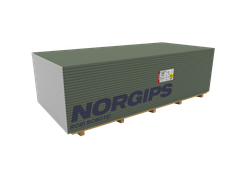
NORGIPS S GKFI 15 mm type DFH2
Fire-resistant plasterboard, impregnated
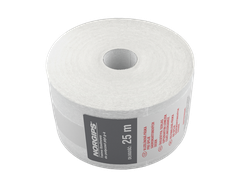
Fleece tape 50 mm
Fleece tape for reinforcing plasterboard joints
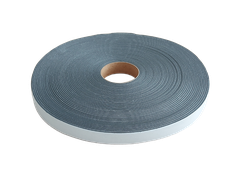
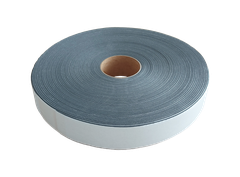
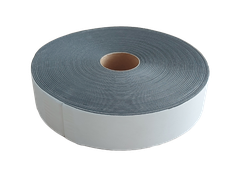
Sound insulating sealing tape 30 mm
Self-adhesive tape for perimeter sealing in plasterboard lining systems
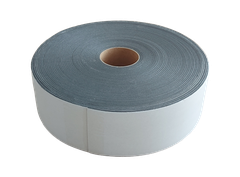
Sound insulating sealing tape 50 mm
Self-adhesive tape for perimeter sealing in plasterboard lining systems
Sound insulating sealing tape 75 mm
Self-adhesive tape for perimeter sealing in plasterboard lining systems
Sound insulating sealing tape 100 mm
Self-adhesive tape for perimeter sealing in plasterboard lining systems
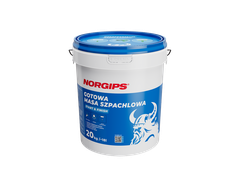
NORGIPS Start & Finish
Ready-mixed dual-purpose filler and finishing compound for grouting plasterboard joints a…
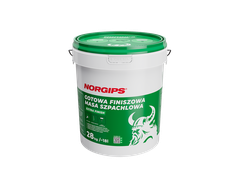
NORGIPS Extra Finish
Ready-mixed finishing compound for grouting plasterboard joints and thin-layer levelling …
NORGIPS Start
Gypsum filler for grouting plasterboard joints
NORGIPS Finish
Gypsum filler for grouting plasterboard joints and thin-layer levelling of mineral substr…

Send a message

We believe that personal data security is a very important issue.
As a result, we provide you with information about the personal data we process. The personal data Controller is Norgips Sp. z o.o. with its registered office /02-255/ Warszawa, ul. Krakowiaków 50. Your data will be processed for the purpose of handling the inquiry you sent to us.
Find more in our Privacy Policy.

This site is protected by reCAPTCHA and the Google Privacy Policy and Terms of Service apply.

Rafał Kaczmarczyk
Deputy Technical Support Manager
Document file
Document file
close

A selection of downloads and material consumption calculations from our website can be included in the document folder.

Click

'To folder' on any document or calculation.

With the document folder you can easily prepare documentation for your investment including:

  • technical documentation of products and solutions
  • material consumption calculations
  • summary product list
  • title sheet with investment metric
Download ZIP Download ZIP
Download PDF Download PDF
Send to @ Send to @
 Clear the file
Close
up